



Grand Theft Auto VI came out on November 19, 2026, and within hours the character people were talking about wasn’t one of its two leads. It was Mandy, a tenant in the first chapter who refuses to pay her rent until Jason fixes her sink. Rockstar never showed her in a trailer or on its website. By the weekend, clips and screenshots of her were everywhere on X, and so were AI-generated images and videos of her made by fans.
For AI creators, that raises an obvious question: should you ride the trend with AI content of Mandy? Our answer is no, and this article explains why, what is true about her, and what creators can take from the trend instead.
The short answers
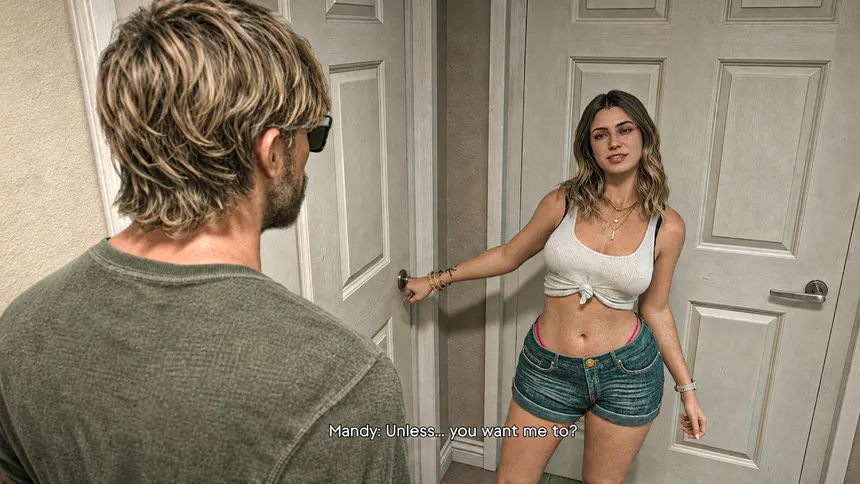
Who is Mandy in GTA 6?
A minor character in the early mission Pipework, where Jason Duval is sent to collect her rent. She refuses to pay until he unblocks her sink, flirts with him, reminds him of a past relationship and later returns in a bikini. Jason turns her down, and an optional second visit shows she has moved on. She is not a romance option.
Who plays Mandy in GTA 6?
Actress Lexie Shoaibi provides her voice and motion capture, which Rockstar’s credits and Shoaibi herself have confirmed. Marissa DuBois, an Instagram model with about 1.2 million followers, says she did the body scan for the character. Rockstar hasn’t confirmed that. If she is right, Mandy’s voice and her body come from two different women.
Is Mandy a real person?
No. Mandy is a fictional character owned by Rockstar Games. She is built from the work of real people, though, and that matters for anyone making content of her.
Can you make AI images of Mandy from GTA 6?
You can, technically, and many people have. Posting them on an account that earns money is a different matter: it uses a character Rockstar owns, and it can depict real women without their consent. The rest of this article explains the risks.
Why she went viral
Part of it is surprise. Rockstar’s marketing focused on the leads, Jason and Lucia, and fans who expected to spend launch day with them met a supporting character who was funny, flirtatious and slightly sinister: in the sink scene, Jason pulls out what looks like a human finger, which has already started theories that she is a serial killer. Short, self-contained and easy to clip, the scene suited social media perfectly.
The attention spilled onto the real people. Shoaibi gained about 69,000 Instagram followers in the first 24 hours and about 200,000 in five days, and she has called the fame “bittersweet.” An account impersonating her was reportedly used for a cryptocurrency pump-and-dump scheme, and she had to post that she has no Twitter account at all. GTA 6 sold more than 24.5 million copies in pre-orders and first-day sales, according to Sensor Tower estimates, so the audience for anything Mandy-related is very large.
Should AI creators make content of her?
For an account you want to keep, three problems outweigh the views.
She belongs to Rockstar
Mandy is part of Rockstar’s copyrighted game. Rockstar’s policy on fan material says Take-Two “does not object” to fans using its material for non-commercial purposes, and defines non-commercial as not making money from the footage you post. Uses for advertising and promotion are excluded. An AI influencer account that earns from subscriptions, brand deals or affiliate links is commercial, so Mandy content on it falls outside what Rockstar tolerates.
Take-Two, Rockstar’s parent company, does enforce its rights. In 2021 it had two fan projects that rebuilt GTA III and Vice City removed from GitHub, then sued the developers when they restored them. Copyright reports against social media posts are much easier to file than a lawsuit, and on Instagram and TikTok repeated reports can cost an account its reach or the account itself.
She is built on real women
Mandy’s face, body and performance come from real people. AI images that look like her also look like them, and many of the Mandy images circulating are sexualised. Nothing suggests either woman agreed to that.
The law has caught up with this kind of content. In the US, the Take It Down Act requires social media and image-sharing platforms to remove non-consensual intimate images, including AI-made “digital forgeries” of real people, within 48 hours of a valid request; the Federal Trade Commission began enforcing it on May 19, 2026. Fan platforms have their own rules: Fanvue’s community guidelines say AI-replicated media of a real person needs that person’s documented consent and identity verification, ban impersonation, and require that you hold the rights to everything you upload. We are not lawyers, and the line between a game character and the real women behind her is not settled, but this is not ground to build a business on.
The audience isn’t yours
Followers who arrive for Mandy are following Mandy. When the trend fades, and trends around a single scene usually fade within weeks, they have no reason to stay for your character. In our view, an account that borrows someone else’s character for growth ends up with a follower count that doesn’t buy anything, the same problem we describe in our guide to how AI influencers make money.
What to take from the trend instead
The Mandy moment is still useful, as evidence of what makes a character spread.
The breakout character was a supporting one nobody marketed. She had a single short scene with a clear setup, a twist and a line people could repeat. That is a format an original AI influencer can use: small, self-contained moments with a recognisable look, rather than polished portraits. John Pork, a pig-headed virtual character, spread the same way when fans turned one selfie into an incoming phone call.
You can also take part in the conversation without copying her. An original character can react to the game, joke about the sink scene or comment on the trend in its own voice. That is commentary rather than an imitation, and it keeps your account clean.
Finally, watch for the scams around her. Impersonation accounts, fake “official” pages and cryptocurrency schemes follow every viral name. If you collaborate with or feature anyone connected to the trend, verify the account first, and check our AI disclosure rules tracker before posting anything AI-made about a real person.
Frequently asked questions
Can you romance Mandy in GTA 6?
No. Jason’s dialogue choices in the Pipework mission don’t lead to a romance, and in the optional later scene she tells him she has moved on.
Who is the voice and model of Mandy in GTA 6?
Lexie Shoaibi voices Mandy and did her motion capture. Marissa DuBois, a model and content creator, says she provided the body scan, which Rockstar hasn’t confirmed.
Is Mandy a serial killer in GTA 6?
That is a fan theory. It comes from the Pipework scene, where Jason pulls what looks like a human finger out of her sink. Rockstar hasn’t confirmed anything, and we don’t cover later story spoilers here.
Is it legal to make AI images of GTA 6 characters?
Rockstar tolerates non-commercial fan use of its material, but not uses that make money. AI images that resemble real people, such as the performers behind a character, can also break platform rules and, if they are sexual, laws on non-consensual intimate imagery. For a monetised account, the safe answer is not to.
Checked on November 23, 2026. GTA 6 launched four days before publication, and details about the cast may still change; we’ll update this article if Rockstar confirms who modelled the character.
Sources
- Dexerto, Who is Mandy in GTA 6? (November 19, 2026)
- KeenGamer, GTA 6’s Mandy goes viral on launch day after Pipework scene
- UNILAD Tech, Actress behind Mandy confirms role as followers surge (November 20, 2026)
- UNILAD, Fans discover model who provided Mandy’s body scan (November 21, 2026)
- LADbible, Mandy actress speaks out on “bittersweet” fame (November 23, 2026)
- Rockstar Games, Policy on posting copyrighted Rockstar Games material (updated January 10, 2025)
- PC Gamer, Take-Two sues GTA modders (October 4, 2021)
- FTC, Take It Down Act enforcement starts now (May 19, 2026)
- Fanvue, Community Guidelines (updated October 12, 2026)
- GamesRadar, GTA 6 leaks prove AI disinformation is more rampant than you think